
The Role of Lighting in Creating a Functional Home
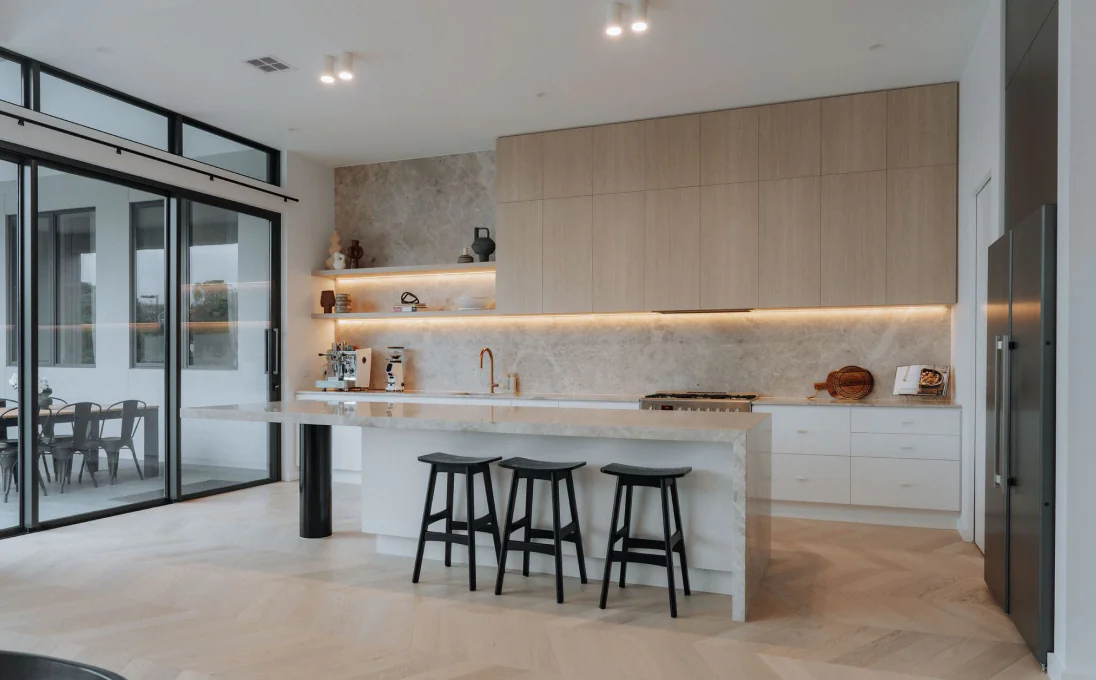
"Lighting influences how comfortable, practical and inviting a home feels," she says. "It plays a significant role in supporting everyday activities while also creating warmth and atmosphere."
One of the most common mistakes homeowners make is relying solely on downlights throughout the home. While they provide general illumination, downlights alone can leave spaces feeling flat and lacking character.
Instead, a layered approach is becoming increasingly popular, combining ambient, task and feature lighting to create flexibility and depth. Pendants over kitchen islands, wall lights, LED strip lighting and dimmers allow homeowners to tailor lighting to different activities and times of day.


Natural light also plays a critical role. A well-designed floorplan considers orientation, window placement and open-plan living to maximise sunlight throughout the day. Artificial lighting can then be used to complement natural light and ensure spaces remain functional and comfortable after dark. Carter Grange's design approach places strong emphasis on optimising homes for natural light from the outset.

Looking ahead, layered lighting, integrated LED solutions and smart home technology are among the strongest trends emerging in modern home design. These features not only enhance the aesthetics of a home but also improve the way homeowners live and interact with their spaces.
As home design continues to evolve, lighting is proving to be far more than a practical necessity. When considered early in the design process, it becomes a powerful tool for creating homes that are functional, flexible and enjoyable to live in every day.


